Social Capital & Agricultural Technology Development: SoCapZ
Using lab-in-the-field experiments, we aim to determine if beneficiaries of a development project exhibit higher levels of cognitive and structural social capital.
Abstract
The central hypothesis of the SoCapZ project is that there are important two-ways interactions between the social capital of farmers and farm communities, and the agricultural development projects. On the one hand, projects may increase the social capital of farmers, on the other hand communities with higher social capital may see more rapid adaptations of practices promoted by the projects.
To better understand these interactions, the SoCapZ project developed a methodology to measure the structural and cognitive components of social capital at farm and community scales. It combines surveys and lab-in-the-field incentivized games.
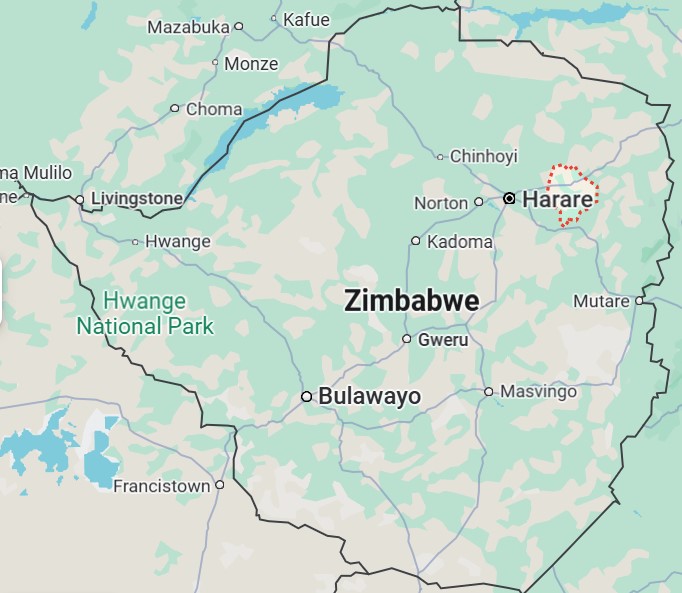
For the SoCapZ one year project, we applied the methodology with rural communities of Zimbabwe, that had been selected by an NGO to start VSLA. The objective was to measure the social capital of farmers groups selected by the NGO, and of equivalent control groups. We found that, given the selection process used by the NGO, farmers selected groups had more prior structural social capital, but they did not have particularly higher cognitive social capital (trust & trustworthiness).
We intend to use that methodology again after three years with the same communities. The re-use of the SoCapZ methodology will allow us to characterize the role of social capital in the theory of changes of an agricultural development project.
Research ouput
Belard, A., Farolfi, S., Jourdain, D., Manyanga, M., Pedzisa, T., Willinger, M. They know each other, but do they trust each other? Social capital and selected beneficiaries of community-based development projects: A lab-in-the-field in rural Zimbabwe. Under review at World Development Perspective.
Funding
This project was funded through Labex AGRO 2011-LABX-002, project n°2101-044 (under I-Site Muse framework) coordinated by Agropolis Fondation.